
The modern automotive protective coatings market has shifted from basic cosmetic vinyl wraps to high-performance TPU Color PPF (Thermoplastic Polyurethane Paint Protection Film).
Traditional Polyvinyl Chloride (PVC) films offered basic color conversion, yet they came with poor mechanical endurance for real-world automotive use.
Aliphatic TPU color protection films deliver dissipating kinetic energy, solid chemical resistance, and dependable long-term optical and color stability.
This technical guide analyzes the physical mechanisms, chemical barriers, material standards, thickness selection criteria, and distributor demonstration methods that define premium Paint Protection Film technology.
Key Takeaways
- Viscoelastic Energy Absorption: Aliphatic TPU elastomers deform elastically upon dynamic impact, absorbing micro-projectiles that would otherwise fracture brittle clear coats or PVC films.
- Embedded vs. Surface-Sprayed Pigmentation: Color-embedded TPU reduces the likelihood of delamination, orange peel, and UV-induced color fading compared to surface-painted alternatives.
- Standardized Qualification: Performance is verified through standardized testing protocols including SAE J400 / ISO 20567-1 for gravel impact, ASTM D882 for tensile strength, and ASTM D1004 for tear thresholds.
- Market Thickness Strategy: Strategic thickness deployment ranges from 6.5 mil for intricate wraps up to 10+ mil for heavy machinery, windshield protection, and high-impact industrial applications.
Physical Protection Mechanics: Energy Absorption & Impact Dissipation
The Viscoelastic Properties of Aliphatic TPU Elastomers
At the core of modern TPU Color PPF is aliphatic thermoplastic polyurethane. Unlike aromatic TPU (which possesses double-bond ring structures susceptible to UV degradation and yellowing), aliphatic TPU utilizes hydrogenated, saturated molecular chains.
Viscoelasticity enables the film to exhibit both viscous fluid characteristics and elastic solid responses when subjected to stress:
- Elastic Strain Response: Under normal mechanical loads, polymer chains stretch without permanently displacing their cross-linked molecular network.
- Viscous Dissipation: When subjected to rapid stress, viscous resistance within the soft-segment TPU domains converts dynamic force into low-level thermal energy.
High-Velocity Kinetic Energy Dissipation vs. Rigid PVC Brittle Fracture
When road gravel strikes an OEM paint clear coat at high speeds (v > 80km/h), the rigid paint substrate cannot deform fast enough to distribute the force, resulting in micro-chipping and cracking down to the primer or bare metal.
- PVC (Polyvinyl Chloride): Rigid, plasticized polymer structure with low elongation capacity. High-velocity kinetic energy concentrated at the point of impact causes brittle fracture and film tearing.
- Aliphatic TPU PPF: Engineered with high elongation-at-break and superior yield memory. Upon impact, the TPU soft segments temporarily collapse and stretch—spreading the point-impact force across a lateral surface area tens of times larger than the point of contact before restoring its original state. This viscoelastic response is key to effectively shielding vehicles against [common physical and environmental paint threats] without risking substrate damage.
Penetration Resistance: Guarding Against Gravel, Debris, and Vandalism
The structural matrix of a multi-layer Paint Protection Film comprises three key functional zones:
- Self-Healing Topcoat (0.5 – 1.0mil): Cross-linked acrylic/urethane polymer engineered to re-flow under mild thermal exposure (>40℃).
- Aliphatic TPU Core (6.0 – 8.0mil): Primary structural cushion designed to resist sharp point shear forces.
- Pressure-Sensitive Adhesive (PSA)(1.0 – 1.5mil): Acrylic adhesive formulation calibrated for high peel strength without leaving residual adhesive or causing clear coat lifting upon removal.
This multi-layer construction mitigates road debris strikes, brush scratches, key scratches, and light parking-lot vandalism by preventing sharp edge penetration into the underlying substrate.
Chemical & Environmental Barrier Function
Hydrophobic Topcoats and Chemical Stain Resistance
The outermost topcoat of premium TPU Color PPF incorporates low-surface-energy fluorocarbon or silane chemistry. This produces a high water contact angle (>105°), rendering the surface hydrophobic and oleophobic.
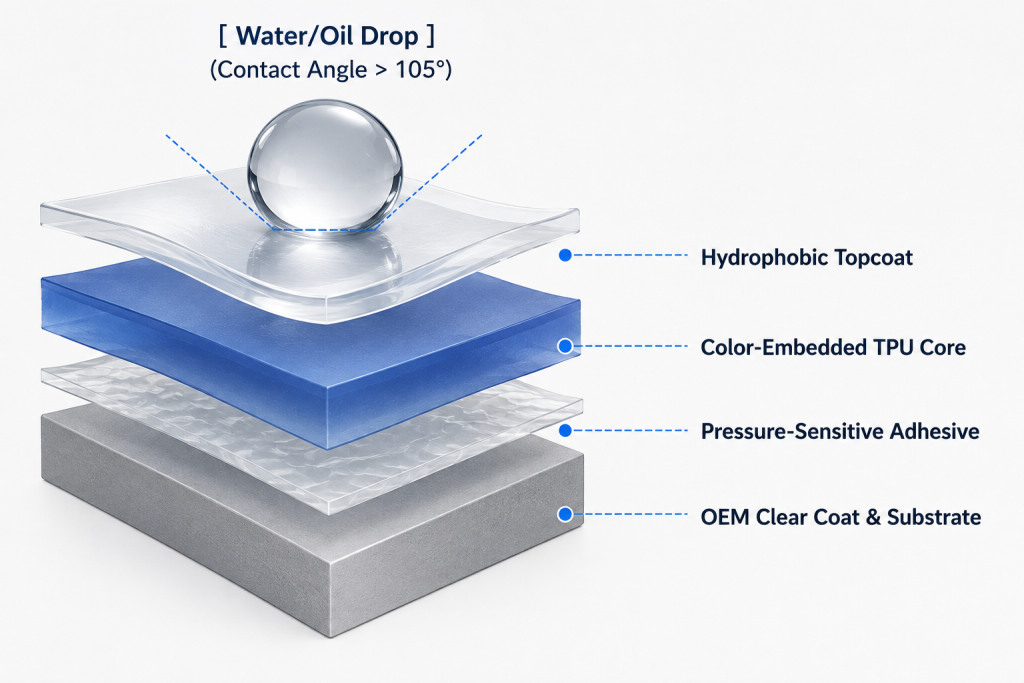
Defending Against Acid Rain, Bird Droppings, Insect Sap, and Road Salts
Environmental contaminants damage unprotected clear coats through acidic etching and oxidative stress:
- Acid Rain & Industrial Fallout: Acidic compounds (pH} < 4.0) etch unshielded clear coats. The fluoropolymer topcoat acts as a chemically inert barrier, resisting acidic compounds.
- Bird Droppings & Tree Sap: High-protein organic acids expand and contract during thermal cycles, baking into standard paint surfaces. The non-porous structure of TPU limits contaminant penetration into the color layer.
- Road Salts & Debris De-icers: Calcium and sodium chloride salts cause accelerated oxidation on micro-chipped paint surfaces. The continuous film barrier reduces moisture ingress and salt ingress.
Color Consistency in TPU Color PPF: Color-Embedded TPU vs. Surface Spraying
When evaluating TPU Color PPF, manufacturing architecture determines long-term color fastness and physical durability:
| Feature / Property | Color-Embedded TPU (Extruded Color Core) | Surface-Sprayed TPU (Top-Painted Color) |
|---|---|---|
| Manufacturing Process | Color pigments blended directly into aliphatic TPU resin masterbatch prior to extrusion. | Clear TPU extruded first; color coat sprayed onto the surface before topcoating. |
| Delamination Risk | Minimal. Color is integrated into the core polymer layer. | High. Shearing forces or gravel strikes can cause inter-layer separation. |
| Color Depth & Uniformity | Consistent optical clarity and color saturation across complex concave/convex curves. | Risk of color thinning, stretching discoloration, or “ghosting” over sharp body lines. |
| Scratch & Self-Healing | Topcoat heals micro-scratches without revealing underlying color variance. | Deeper scratches cut through the thin surface paint layer, revealing clear TPU underneath. |
| Orange Peel Texture | Ultra-smooth finish matching or exceeding OEM clear coat gloss. | Susceptible to orange-peel ripples from uneven spray coating application. |
Lab Testing Standards for Paint Protection
To specify and verify Paint Protection Film for commercial automotive and industrial applications, standardized laboratory testing protocols provide objective, repeatable benchmarks.
SAE J400 & ISO 20567-1 (Gravelometer Gravel Impact Resistance)
The standard method for evaluating a coating’s resistance to gravel impact involves bombarding test panels with standardized steel shot or gravel under controlled pneumatic pressure.
- SAE J400 Protocol: Standardized gravel (1 pint, approx. 500 pieces of graded gravel)) is fired at 55 psi(380 kPa) against a chilled or ambient-temperature test panel positioned at 90° or 45°.
- ISO 20567-1 Protocol: Uses chilled iron shot ($4-5\text{ mm}$) projected by air pressure onto the substrate in multiple standardized impact cycles.
Rating Scales (Grade 1–10) and Substrate Paint Condition
- SAE J400 Scale: Ratings range from 1 (severe failure/total paint loss) to 10 (no visible surface chipping).
- Point Density Modifiers: Letter codes (A–D) designate chip frequency per unit area (4 inches × 4 inches).
- Grade 10 / No Chip: Target qualification for premium 8.5+ mil aliphatic TPU Color PPF. Substrate clear coat remains 100% intact with extremely low bare metal exposure.
ASTM D882 (Tensile Strength & Elongation at Break)
ASTM D882 measures the tensile properties of thin plastic sheeting:
- Tensile Strength at Break: Evaluates the maximum load force the film withstands before structural rupture (Target: > 30 MPa).
- Elongation at Break: Measures the maximum deformation percentage prior to fracture (Target: > 350% – 450%). High elongation ensures installers can stretch the film around complex vehicle contours without tearing or causing stress whitening.
ASTM D1004 (Tear and Puncture Resistance Thresholds)
ASTM D1004 measures tear initiation resistance in plastic film using a notched specimen design:
- Puncture Threshold: Measures force required for a standardized needle or punch probe to penetrate the film matrix (Target: > 25 N).
- Tear Propagation Resistance: Ensures that once a micro-puncture occurs (e.g., sharp stone impact), the film does not tear along stress lines during high-speed wind exposure or tension washing.
Parameter Thresholds: Specifying the Right Thickness for the Right Market
Selecting the correct gauge thickness requires balancing stretchability during installation against mechanical impact absorption.
Total Film Thickness Matrix
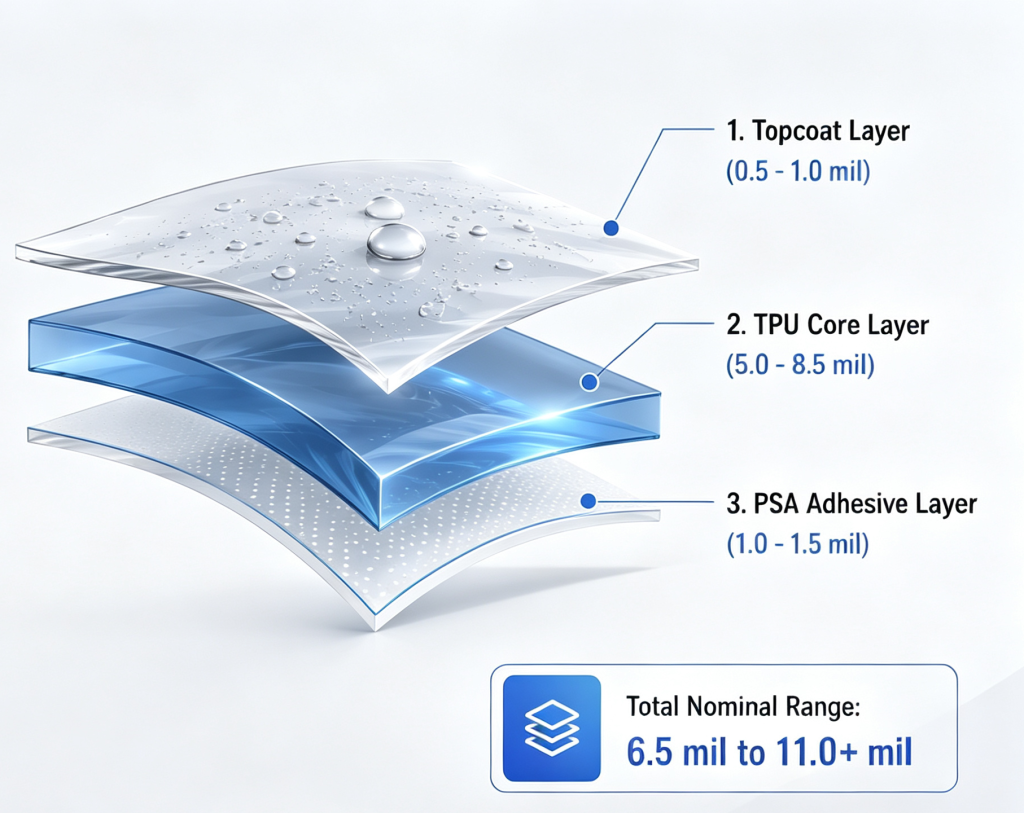
Target: Complex Contours Target: Daily Driver Autos Target: Mining / Off-Road
- 6.5 mil (Economy / Complex Contours)
- Structure: 0.5mil topcoat + 5.0 milTPU + 1.0 mil adhesive.
- Best For: Smooth color wraps, intricate body panels, tight recess curves, low-risk impact zones.
- 8.5 mil (Premium Automotive Standard)
- Structure: 0.75 mil topcoat + 6.25 mil TPU + 1.5 mil adhesive.
- Best For: Full vehicle paint protection, front bumpers, hoods, rocker panels, high-velocity highway driving.
- 10+ mil (Heavy Duty & Specialty Applications)
- Structure: 1.0 mil topcoat + 8.0 mil TPU + 1.5mil adhesive.
- Best For: Off-road vehicles, track cars, high-abrasion commercial zones, heavy machinery.
Cross-Industry Line Expansion: From Auto Paint to Heavy Machinery & Windshields
Heavy Equipment Protection (Excavators & Mining Trucks)
Industrial machinery operating in harsh construction or mining environments faces severe mechanical abrasion, gravel impact, and hydraulic fluid exposure:
- Application: Hydraulic arm boom protection, cab entry steps, lower chassis rails, engine access panels.
- Film Spec: 10 mil to 12 mil heavy-duty clear or color TPU PPF engineered to withstand continuous rock strikes, concrete dust abrasion, and diesel fuel spills.
Windshield Protection Film (WPF) and Anti-Vandalism Security Films
- Windshield Protection Film: Optical-grade, ultra-clear TPU engineered with high UV resistance (>99%) and high light transmission (>90%VLT). Prevents pitting, bullseye cracks, and star ruptures on expensive laminated front windshields and sensor-equipped glass assemblies.
- Anti-Vandalism & Security: Multi-layer laminated PET/TPU films applied to side windows and glass architectural panels to prevent smash-and-grab entry, force deformation, and glass fragment dispersion upon impact.
Showroom Demonstration Techniques for Distributors
For B2B distributors and professional installers, converting prospective clients requires moving beyond spec sheets to hands-on physical validation.
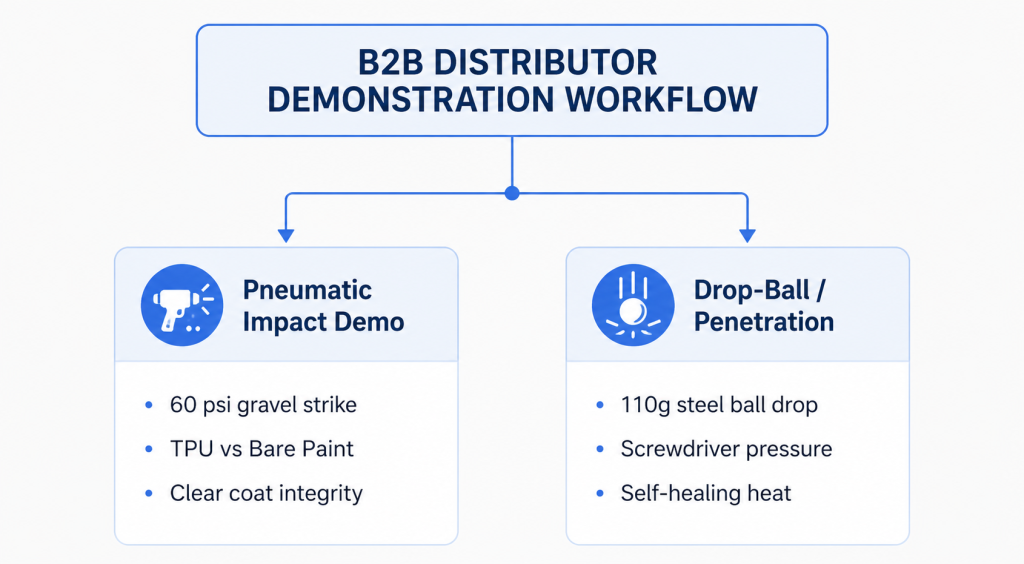
The Pneumatic Gravel Impact Machine Demonstration
- Equipment Setup: Desktop pneumatic gravelometer chamber connected to a standardized compressed air source.
- Demonstration Substrates: Dual-panel setup — Panel A (Bare OEM painted metal sheet); Panel B (OEM painted panel covered with 8.5 mil TPU Color PPF).
- Execution: Fire 50 grams of angular basalt gravel or steel shot against both panels simultaneously for 10 seconds.
- Client Takeaway: Panel A shows extensive paint chipping down to bare metal. Panel B shows negligible paint damage; removing the film reveals an untouched, pristine OEM painted surface underneath.
Drop-Ball Puncture & Screwdriver Stress Testing
- Drop-Ball Puncture Tester: A stainless steel ball dropped through a 1.5 meter vertical guide tube onto a film sample clamped across a hollow ring.
- Observation: PVC or vinyl films fracture and tear instantly upon impact. TPU Color PPF absorbs the impact energy, stretching into the cavity and rebounding elastically without tearing.
- Screwdriver Probe Stress Test: Apply manual force using a blunt flathead screwdriver against a film-covered painted panel.
- Observation: Show prospects that extreme point pressure stretches the elastomeric TPU core without breaching the paint layer. Follow up by applying a heat gun (60℃ to 80℃) demonstrate thermal recovery and self-healing of surface micro-stretches in real time.
 English
  简体中文
简体中文  Español
  Français