
Key Takeaways
- Dual-Action Engine: TPU Color PPF combines the dense, opaque look of a custom color change with the high-impact shielding of clear paint protection film.
- Aliphatic Polyurethane Core: Unlike traditional vinyl wraps built on unstable PVC, color paint protection film uses an aliphatic TPU core to resist yellowing, fading, and thermal cracking.
- Instant Self-Healing: Micro-scratches, wash swirl marks, and superficial abrasions on colored PPF erase automatically when exposed to sunlight or warm water.
Introduction: The Evolution of Surface Customization
For decades, the automotive aftermarket has divided paint customization and surface protection into two distinct categories. Enthusiasts and vehicle owners who wanted to change their vehicle’s appearance used traditional vinyl wraps, which offered hundreds of shades but provided almost zero defense against road debris. Conversely, those seeking elite rock chip protection chose clear paint protection film, maintaining safety while keeping the original factory color.
The emergence of TPU Color PPF has resolved this compromise. This material introduces a new category of automotive styling, combining full-color transformation with heavy-duty impact defense.
To understand why Colored PPF is replacing legacy vinyl alternatives, we must look into the underlying material science, multi-layer engineering, and physical performance of high-grade Color Paint Protection Film.
What is TPU Color PPF?
At its core, TPU Color PPF is an advanced, multi-layered elastomeric film that can be applied to a vehicle’s exterior surfaces using either dry or wet installation methods. Dry application offers faster turnaround for experienced installers working on small panels, while wet installation remains the industry standard for full-vehicle wraps, delivering superior edge conformity and long-term adhesion. “TPU” stands for Thermoplastic Polyurethane, a high-performance polymer known for its elasticity, transparency, and resistance to oil, grease, and abrasion.
Unlike clear protection films that use transparent polyurethane layers, colored versions incorporate deep, stable pigments directly into the polyurethane matrix during extrusion. This engineering step allows the film to completely block out the underlying factory paint color while providing a durable barrier that protects the vehicle’s surfaces.
The Molecular Breakdown: Why Aliphatic Polyurethane Matters
To evaluate how Color Paint Protection Film performs under long-term environmental exposure, we must look at its molecular chemistry. Polyurethanes generally fall into two categories: aromatic and aliphatic.
Aromatic Polyurethanes vs. Aliphatic Polyurethanes
Aromatic polyurethanes contain chemical structures called benzene rings. When exposed to solar ultraviolet (UV) radiation, these rings break down, forming colored degradation products that cause the film to yellow and become brittle within months.
Premium TPU Color PPF is engineered exclusively with aliphatic polyurethanes. These formulations use fully saturated hydrocarbon structures that lack benzene rings, making them inherently stable against UV light. This chemical structure ensures that whether you choose a deep gloss black, a vibrant color, or a smooth satin option, the film will not fade, chalk, yellow, or crack, even after years of direct exposure to intense sunlight.
Anatomy of a Premium Colored PPF
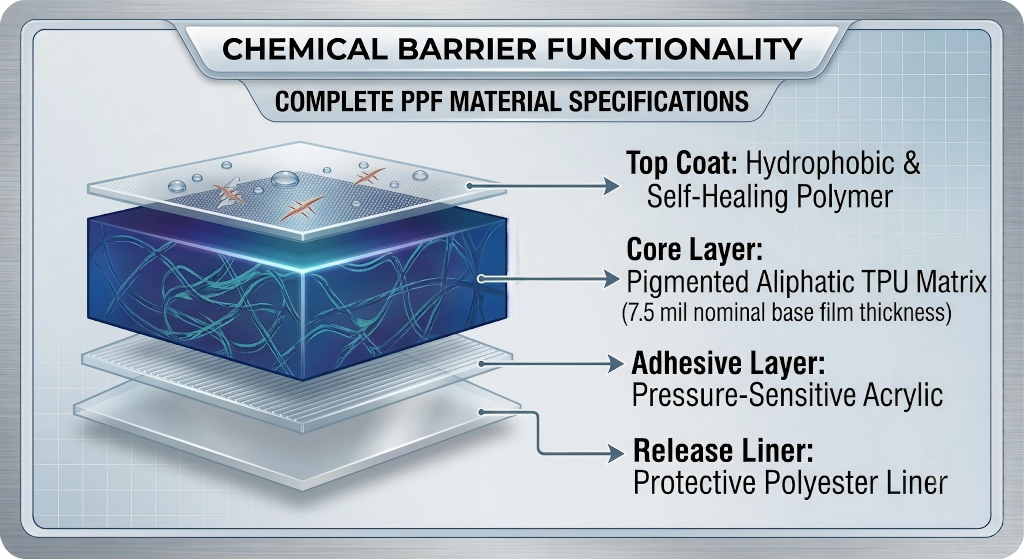
In the industry, PPF thickness is commonly specified in two ways: base film thickness and total finished film thickness. For the 7.5 mil TPU Color PPF featured on this site, the 7.5 mil specification refers exclusively to the TPU base film (core layer). When including the top coat and pressure-sensitive adhesive layer, the total finished thickness (excluding the release liner) reaches 8.0 mils or more. This total thickness is split across three distinct functional layers:
1. The Cross-Linked Hydrophobic Top Coat
The outermost layer features a low-surface-energy, cross-linked polymer top coat. This layer provides exceptional hydrophobic performance, causing water- and oil-based contaminants to bead up and roll off easily. It also serves as the first line of defense against bird droppings, acid rain, and tree sap, preventing them from etching the deeper layers of the film.
2. The Pigmented Aliphatic TPU Core (7.5 mil nominal base film)
This layer provides the film’s strength and color depth, and is the layer measured for the advertised 7.5 mil thickness rating. The pigments are thoroughly mixed into the polyurethane resin before extrusion, ensuring consistent color distribution and absolute opacity that completely hides the original factory paint color. This thick, elastic layer acts as a cushion, absorbing and dissipating energy from road debris.
3. The Pressure-Sensitive Acrylic Adhesive
The bottom layer consists of a high-clarity, pressure-sensitive acrylic adhesive. This system is carefully formulated to provide excellent repositionability during wet installation, an optimal balance of initial tack along edges, and a stable bond over a 7-to-10-year service life. Crucially, it is engineered for clean removal, leaving zero residue and causing no damage to factory clear coats.
Physical Performance Metrics: Defensive Capabilities
To understand the practical benefits of Colored PPF, we can look at how its physical properties compare to traditional automotive polyvinyl chloride (PVC) vinyl wraps.
Kinetic Impact Resistance
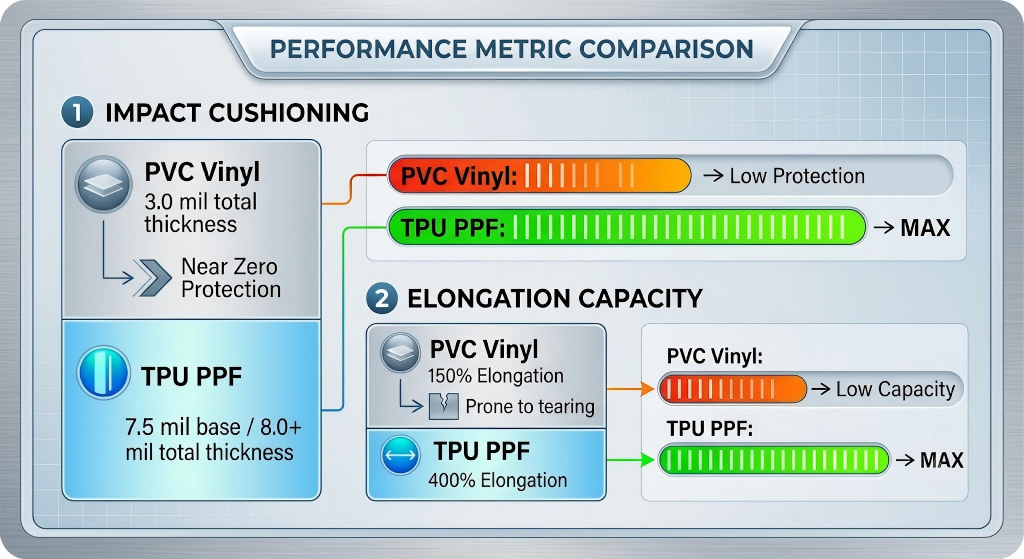
Standard color wraps rely on PVC vinyl, which typically measures 2.5 to 3.5 mils in total thickness. Vinyl is rigid and tears easily under impact, offering almost no protection against flying stones.
TPU Color PPF, with a 7.5 mil TPU base layer and over 8.0 mils of total thickness, functions as a high-density energy buffer. When a piece of road gravel hits the surface, the elastomeric polyurethane stretches to absorb and distribute the kinetic force, preventing the impact from cracking or chipping the underlying factory paint.
Elongation and Tensile Strength
Aliphatic TPU features an elongation break point exceeding 350% to 400%. This high elasticity allows the film to stretch cleanly around complex bumpers, deep air intakes, and sharp body creases without thinning out or losing its structural integrity. Traditional PVC vinyl, by contrast, becomes brittle when stretched, increasing the risk of premature peeling and stress cracks along sharp body lines.
| Engineering Property | High-Tier TPU Color PPF | Traditional PVC Vinyl Wrap |
|---|---|---|
| Material Base | Aliphatic Polyurethane | Polyvinyl Chloride |
| Nominal Base Film Thickness | 7.5 mils | – |
| Total Finished Thickness | 8.0+ mils | 2.5 to 3.5 mils |
| Self-Healing Index | High (Heat-activated recovery) | Zero (Scratches remain permanent) |
| UV Resistance | Exceptional (No fading) | Moderate to Low (Fades over time) |
| Expected Lifespan | 7 to 10 Years | 2 to 3 Years |
| Primary Focus | Style + Maximum Protection | Pure Color Aesthetics |
The Science of Self-Healing Technology
The standout feature of premium TPU Color PPF is its ability to self-heal. Every day, driving inevitably introduces fine surface damage, such as swirl marks from washing, brush scratches, and dust abrasions. On standard paint or vinyl wraps, these micro-scratches accumulate over time, clouding the finish and reducing gloss.
[Micro-Scratch Destroys Sheen] —> [Apply Thermal Energy: Sun/Water] —> [Polymers Flow Back into Alignment]
This recovery process relies on the shape-memory characteristics of cross-linked polyurethanes. The molecules form a flexible network that remembers its original flat state. When a light scratch occurs, it doesn’t tear the polymer chain; it simply pushes the molecules apart.
When exposed to warmth—such as ambient sunlight, engine heat, or warm water—the polymer structure relaxes and flows back into its original position, erasing the scratch and restoring the surface finish in minutes.
Environmental and Chemical Defense Mechanisms
Automotive finishes face constant exposure to chemical hazards. Environmental factors like industrial fallout, acid rain, sea salt, winter road chemicals, bird droppings, and insect splatters can quickly etch into a factory clear coat, causing permanent blemishes.
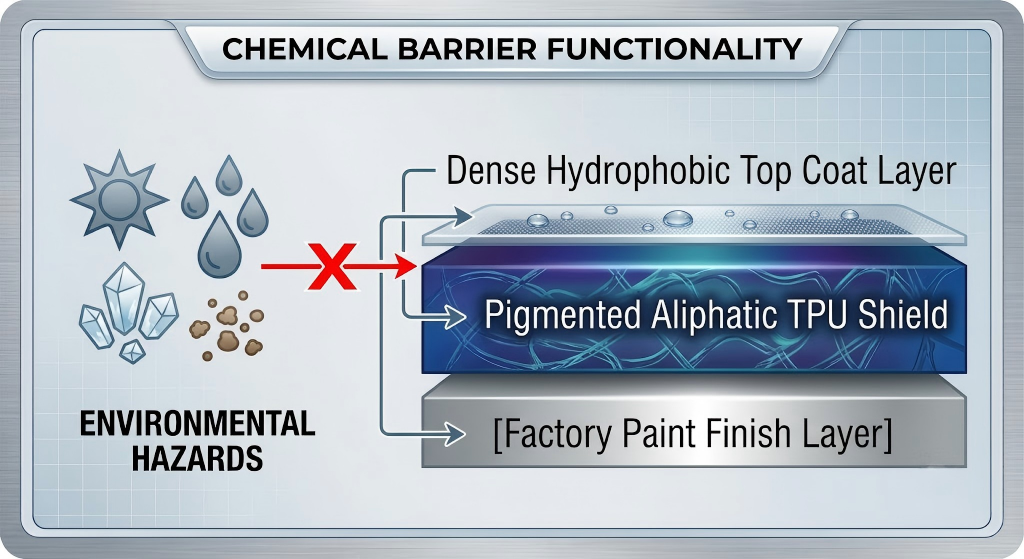
The dense molecular structure of Color Paint Protection Film provides excellent chemical isolation. Because the top coat is non-porous and hydrophobic, acids and harsh contaminants cannot penetrate the film to stain or corrode the paint beneath. Instead, the contaminants remain on the surface, where they can be wiped or washed away cleanly during routine maintenance.
Finish Innovations: Gloss vs. Matte Aesthetics
Modern Colored PPF manufacturing allows for a variety of surface finishes, giving car owners options that match or exceed factory paint quality.
Gloss TPU Color PPF
This option delivers a deep, mirror-like shine. Because the polyurethane is cast over optically smooth surfaces, it avoids the textured “orange peel” effect common to cheap vinyl wraps. A premium gloss colored PPF provides a deep, smooth reflection that mimics a freshly cleared factory custom paint job.
Matte TPU Color PPF
For a modern, satin look, matte variants incorporate specialized light-diffusing agents into the top coat layer. This micro-texture scatters light uniformly, softening reflections to highlight the vehicle’s design and body contours. A practical advantage of matte film is its ability to naturally mask dust, fingerprints, and minor road dirt, making it exceptionally easy to maintain.
Installation Fundamentals: The Wet Application Protocol
TPU Color PPF supports both dry and wet installation methods. Dry application can be used for small, simple panels by skilled technicians to speed up workflow. However, for full-vehicle applications and to ensure optimal edge sealing, durability, and finish quality, professional wet-installation protocols are the industry standard. This guide focuses on the standard wet application workflow.
[Surface Wash & Clay Decon] —> [Slip Fluid Alignment] —> [Tack Fluid Edge Flush] —> [Adhesive Curing]
- Preparation: The vehicle undergoes a deep wash, clay bar decontamination, and an isopropyl alcohol (IPA) wipe-down to ensure the paint surface is completely clean and smooth.
- Slip Solution Application: Installers use a slip fluid (typically water mixed with a small amount of surfactant-free lubricant) to flood the panel. This allows the film to slide easily across the panel for precise positioning.
- Squeegee Evacuation: Once aligned, a squeegee is used to press out the slip solution from the center outward, initiating the bond of the pressure-sensitive acrylic adhesive.
- Edge Sealing: Installers use a tack solution (water mixed with isopropyl alcohol) along perimeter edges to quickly flush out remaining slip fluid, locking down the film edges into body seams for a seamless finish.
Technical FAQ
Can ceramic coatings be applied directly over colored PPF?
Yes. Applying a dedicated ceramic coating over colored PPF enhances its hydrophobic performance, helps repel dirt, and adds an extra layer of protection against industrial fallout. It is important to use a coating formulated specifically for elastomeric films to ensure it moves with the TPU without cracking.
Will removing the film damage the factory paint?
No. Premium color paint protection films use stable, non-reactive acrylic adhesives designed for safe removal. As long as the underlying paint was factory-original and fully cured, the film can be peeled away cleanly in one piece without lifting clear coats or leaving behind hardened adhesive residue.
How should colored PPF be washed and maintained?
The film should be maintained using standard, non-abrasive car wash soaps and clean microfiber wash mitts. While automated touchless car washes are safe, high-pressure spray nozzles should be kept at least 30 cm away from film edges to prevent lifting. Avoid using abrasive compounding polishes, which can damage the self-healing top coat.
Summary
TPU Color PPF represents a major technological leap forward in automotive styling and paint protection. By using stable, aliphatic polyurethane chemistry instead of traditional vinyl materials, Color Paint Protection Film delivers a durable solution that combines premium color styling with heavy-duty defense against stone chips, scratches, and weather damage. Whether you choose a high-gloss finish or a modern matte look, investing in Colored PPF ensures long-lasting surface protection and preserves the value of your vehicle’s factory finish.
 English
  简体中文
简体中文  Español
  Français