
Learn what paint protection film (PPF) is, how it works, benefits, types, and why it protects your car’s paint from damage.
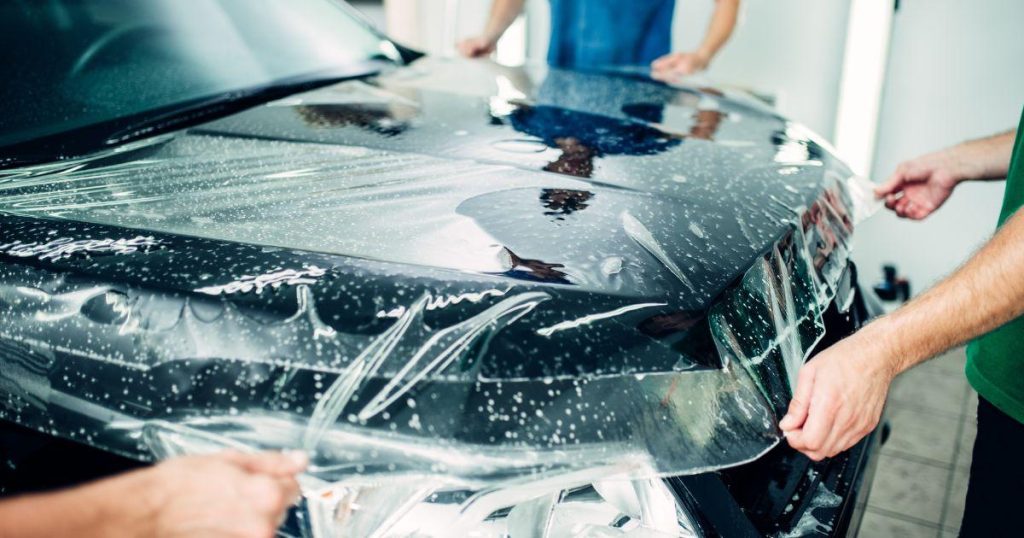
Paint Protection Film (PPF), also known as car protection film or clear bra, is a transparent thermoplastic urethane film applied to a vehicle’s painted surfaces to protect them from damage such as scratches, stone chips, road debris, and UV exposure.
In this guide, we will explain what PPF is, how it works, its benefits, types, and whether it is worth installing on your car.
1. What Is Paint Protection Film (PPF)?
Paint Protection Film (PPF) is a high-performance transparent protective layer designed to preserve a car’s original paint.
It is usually made from thermoplastic polyurethane (TPU), which gives it:
- High elasticity
- Strong impact resistance
- Self-healing properties (on premium films)
PPF is commonly installed on:
- Car front bumpers
- Hood and fenders
- Side mirrors
- Full vehicle body (full wrap protection)
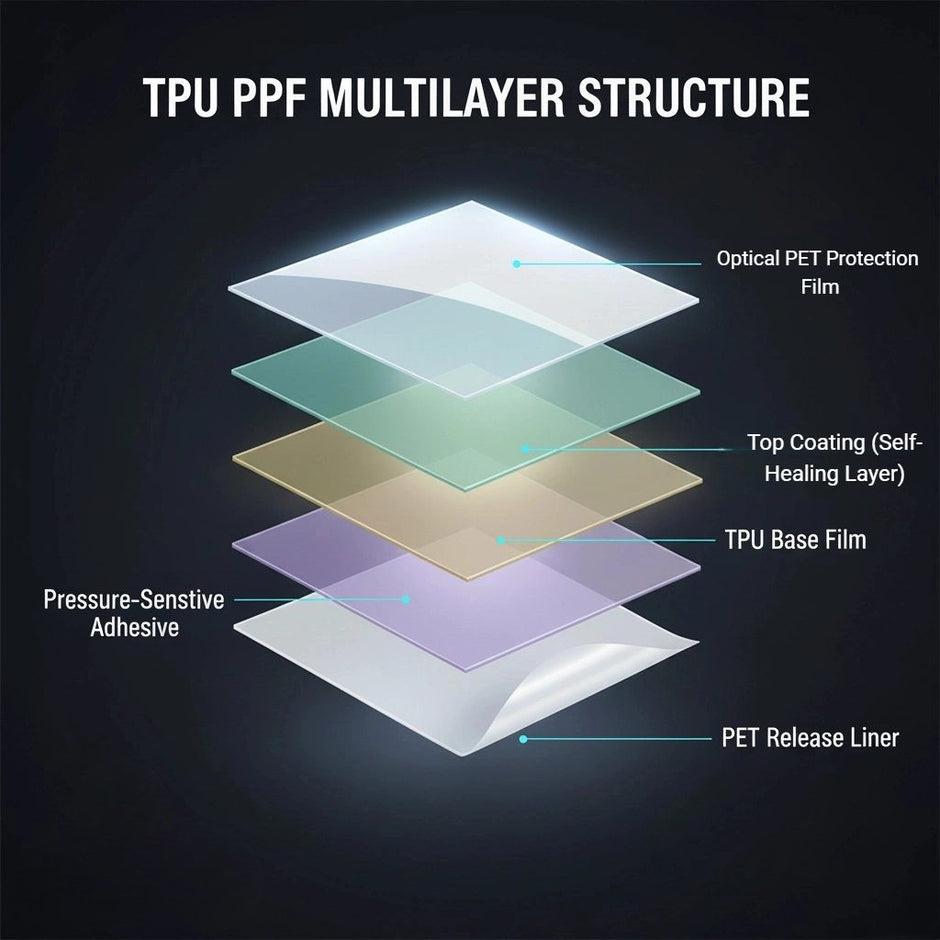
2. How Does PPF Work?
PPF works by absorbing and dispersing external impact before it reaches the car’s paint layer, acting as a resilient buffer to shield the original vehicle coating from gravel hits and minor knocks.
When small scratches or swirl marks form, premium modern TPU films come with a self-healing top coat. Minor blemishes will fade away automatically when exposed to heat such as sunlight or warm water.
This smart repair feature keeps the surface smooth and consistently glossy for long-term use.
3. Key Benefits of Paint Protection Film
Installing PPF provides several long-term advantages for vehicle owners.
3.1 Protection Against Physical Damage
PPF protects against:
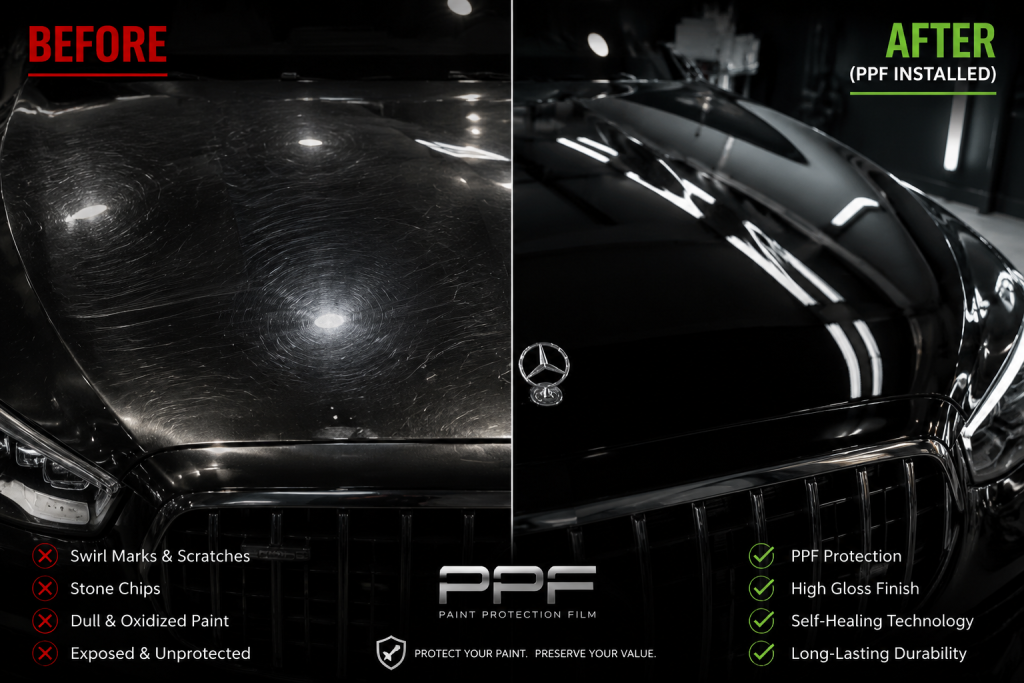
- Stone chips
- Minor scratches
- Road debris impact
- Bug splatter
3.2 UV and Oxidation Resistance
Sun exposure can fade car paint over time. PPF helps reduce UV damage and oxidation.
3.3 Self-Healing Surface (Premium TPU Film)
High-quality TPU films can repair light scratches automatically when exposed to heat.
3.4 Maintains Vehicle Value
By preserving original paint, PPF helps maintain higher resale value.
4. Types of Paint Protection Film
There are different types of PPF available depending on performance and budget.
4.1 Gloss PPF
- Enhances shine
- Maintains original paint appearance
- Most common type
4.2 Matte PPF
- Converts glossy paint into matte finish
- Popular for custom styling
4.3 Self-Healing PPF
- Premium TPU-based film
- Repairs minor scratches with heat
- Adds aesthetic customization
- Combines protection with style
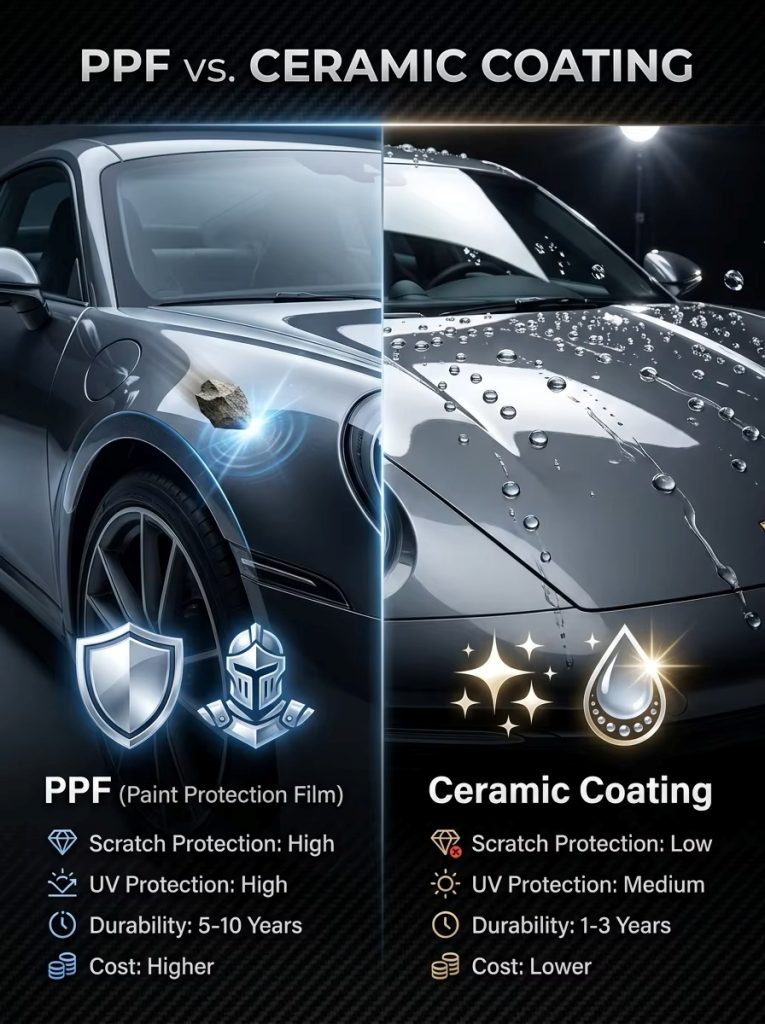
5. PPF vs Ceramic Coating
Many car owners compare PPF with ceramic coating.
| Feature | PPF | Ceramic Coating |
| Scratch Protection | High | Low |
| UV Protection | High | Medium |
| Durability | 5–10 years | 1–3 years |
| Cost | Higher | Lower |
👉 PPF is better for physical protection, while ceramic coating is mainly for shine and hydrophobic effect.
6. Is Paint Protection Film Worth It?
PPF is highly recommended if:
- You drive frequently on highways
- You own a new or luxury car
- You want long-term paint preservation
- You plan to resell the vehicle in future
However, investing in a full set of paint protection film may not be a worthwhile or necessary expense for very low-value vehicles or cars that are barely driven and kept idle most of the time.
For budget vehicles with low resale value, the cost of high-quality TPU PPF often outweighs the potential value it can preserve. Similarly, if the car is rarely used and mostly stored indoors away from road debris, UV rays and daily washing abrasion, the paint faces far fewer risks of scratches and swirl marks, making the protective film an unnecessary extra investment.
7. Installation and Maintenance Tips
To maximize performance:
- Always install PPF on a clean surface
- Avoid washing car within 48 hours after installation
- Use pH-neutral car shampoo
- Avoid abrasive cleaning tools
Proper installation is critical for long-term durability.
8. Conclusion
Paint Protection Film (PPF) is one of the most effective solutions for preserving a car’s exterior. It provides strong physical protection, enhances durability, and helps maintain vehicle value over time.
Whether you choose partial or full-body protection, PPF is a smart investment for long-term car care.
 English
  简体中文
简体中文  Español
  Français